We handle the apostille and legalisation of your documents
If you need to submit a document abroad, you will usually be asked to provide proof of its authenticity. This process is known as legalisation and must always be carried out in the country where the document was issued.
Legalization or Hague Apostille
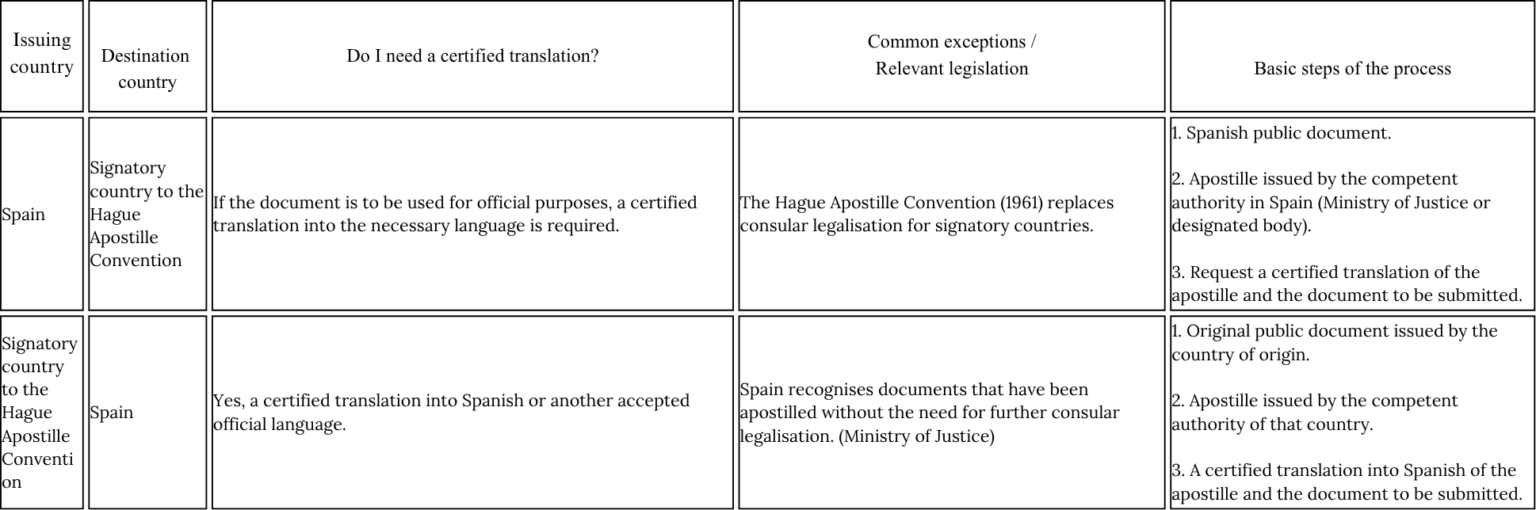
The Hague Apostille is a simplified legalisation procedure that enables a public document to be recognised and accepted in another country by certifying the authenticity of the signature and seal on the document, thereby conferring official validity upon it.
Mc LEHM issues documents that are ready for official use in any of the countries that are signatories to the Hague Convention.
If your document was issued in a country that is a signatory to the Hague Convention, you must first obtain an apostille.
At Mc LEHM, we recommend that you have both the document and the apostille translated at the same time to avoid delays and ensure that it is legally valid.
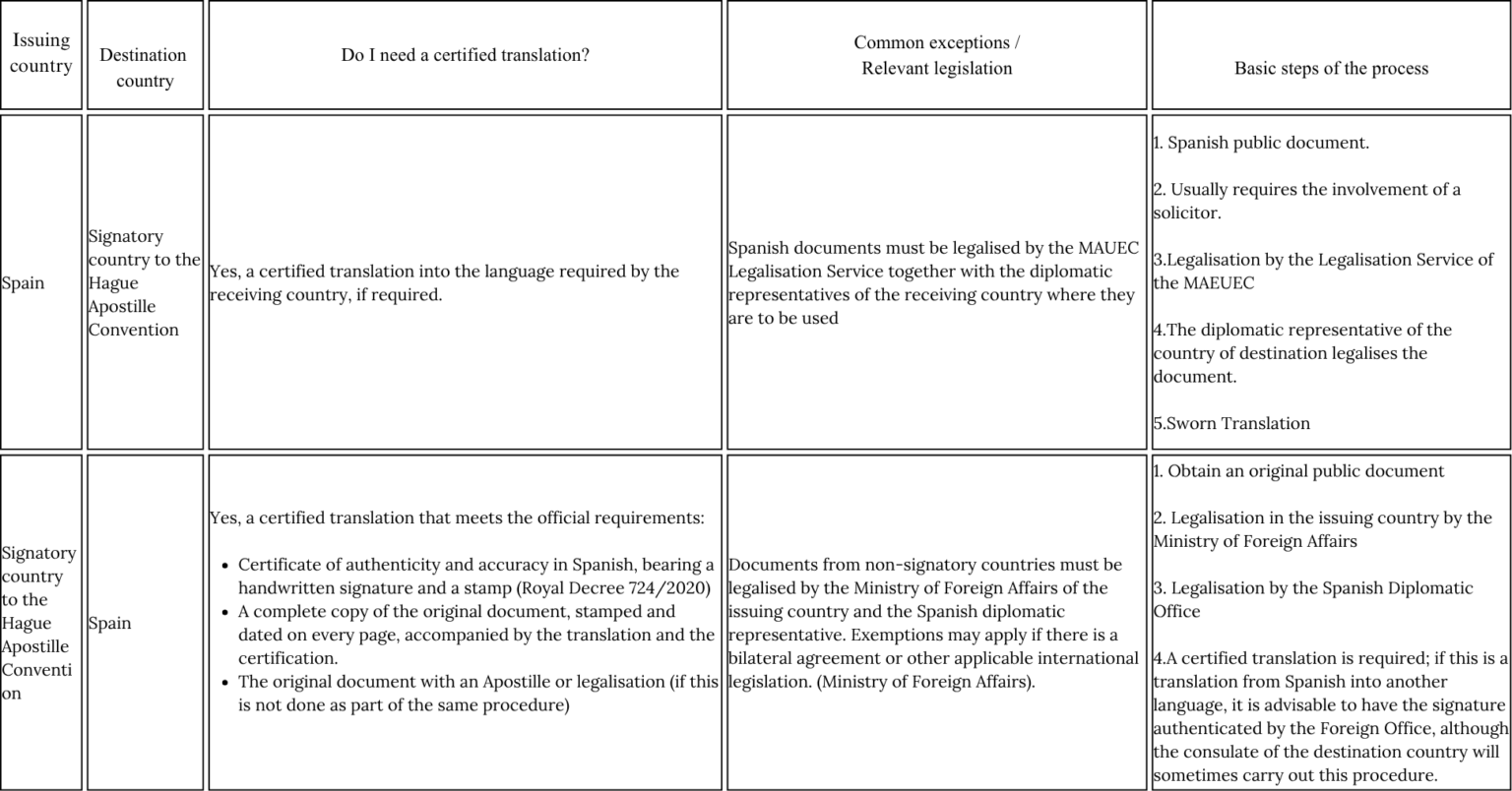
Whenever a document cannot be apostilled because the destination country is not a signatory to the Hague Convention, our specialist legal services team will arrange for diplomatic legalisation through the Legalisation Service of the Ministry of Foreign Affairs and European Cooperation (MAEUEC).
This procedure is essential when documents are to be used outside Spain; it involves verifying that the signature on the document is genuine and confirming the person’s position or role.
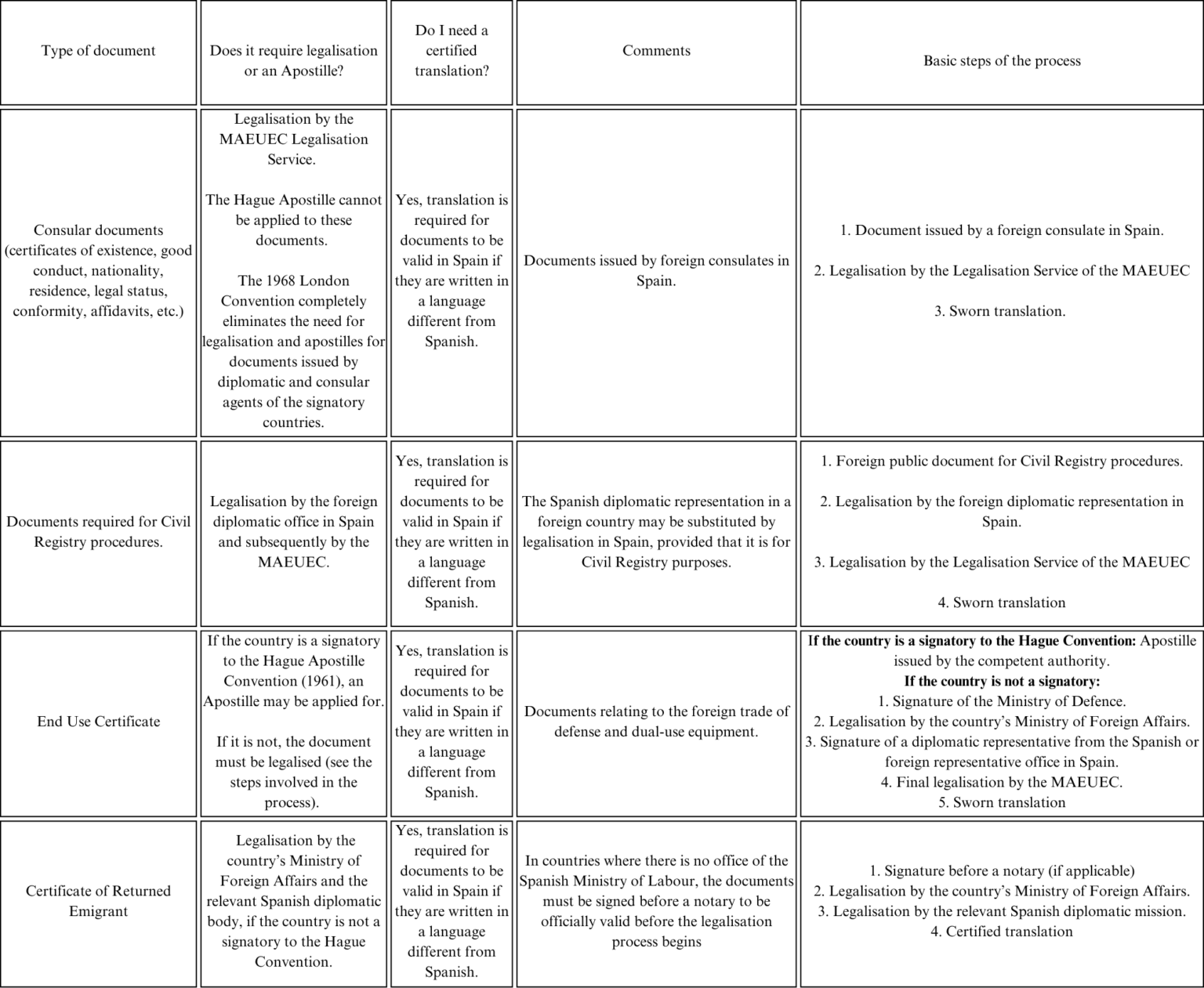
In many cases, certain public documents do not require consular legalisation to be recognised. Thanks to European Union regulations and international conventions, there are exceptions that facilitate the direct recognition of documents between countries.
Find out whether you need to have your documents apostilled or legalised
Have your documents certified with ease:
Our team of experts in certified translations and legalisation will answer your questions and help you complete the entire process.
Comprehensive management
Available 24 hours/day, 365 days/year
A Project Manager will guide you through the entire process
Planning, scheduling of deliverables, and ad-hoc strategies
More than 25 years of experience
Security
ISO 27001 Certification, guaranteeing the availability, integrity, and confidentiality of information
Compliance with Regulation (EU) 2016/679 of the European Parliament and of the Council of 27 April 2016, and Spanish Organic Law 3/2018, of 5 December, on personal data protection and the guarantee of digital rights
Quality
ISO 9001 Quality Management Certification
ISO 17100 Translation Services Certification
ISO 18587 Post-editing Certification
Average client rating: 4.9/5
Those who trust us
FAQs
What is the difference between having a document apostilled and legalised?
An apostille (Hague Convention) certifies documents for signatory countries. Consular legalisation is required if the country is not a signatory to the convention.
Which documents require an apostille or legalisation?
Documents such as birth certificates, academic qualifications, powers of attorney, court judgments and notarised documents.
Does Mc LEHM handle the apostille or legalisation process?
Yes, we handle the whole process for you. All you need to do is send us a scanned copy of the document and we’ll guide you through every step of the way.
How long does the legalisation or apostille process take?
It depends on the type of document and institution, but generally the process can take between 3 and 7 working days.
Can a translated document be apostilled?
No. First, the original document must be apostilled. Only then can the certified translation be carried out. The right order and procedure are essential for the document to be valid.